Master’s in Education (M.Ed.)

Advocate, Innovate, Transform

Dive into curriculum and instructional design, explore teacher inquiry and evidence-based approaches, and develop frameworks for continuous reflection on your practice. Current and aspiring educators will gain the tools to lead from the classroom and stay current in a rapidly evolving educational landscape.
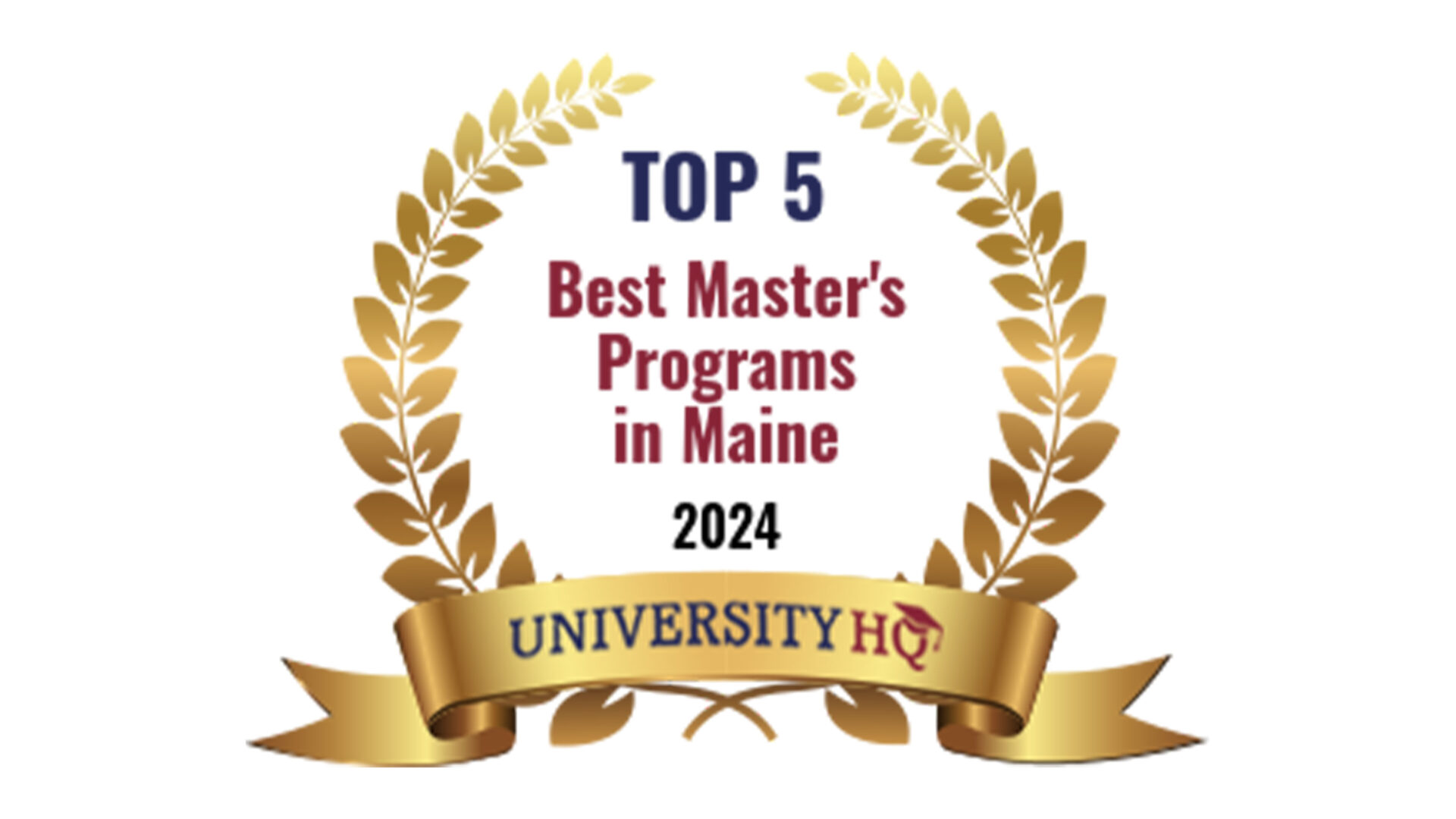

UMF is rated by University Headquarters as having some of the Best Master’s Degrees in Maine (#2 overall). University Headquarters is an industry-leading, independent educational organization that compiles a comprehensive set of information for students who wish to pursue an advanced degree.

Online and Personal: The Best of Both Worlds

The master’s program is taught 100% online, with a mix of independent work, online classroom discussions, and a few Zoom meetings.

This format allows our students the flexibility of online study, while still helping them form meaningful relationships with their professors and other like-minded educators. The Zoom meetings allow for deep, rich, and spontaneous discussions that are often lost with purely asynchronous formats.

Master’s in Education Curriculum

UMF’s Master’s in Education is a student-centered program that models excellence in education through in-depth coursework, inquiry-driven practice, policy engagement, and advocacy. The 30-credit program, which includes a 15-credit concentration, helps teachers elevate their practice through reflection, innovation, and adaptability.

Concentrations (15 Credits)

Core Curriculum (15 Credits)
  • Curriculum, Instruction, and Assessment I: Development and Planning for Digital Age Learners (3 credits)
  • Public Education History, Philosophy, and Policy (3 credits)
  • Cultivating Ethical Leadership (3 credits)
  • Teacher Inquiry (3 credits)
  • Elective (3 credits)

To see course descriptions please review the Graduate Catalog.

Maine Secondary Education Initial Licensure

This concentration is designed for educators interested in gaining their Secondary Education endorsement in Maine in a particular subject area. In addition to the courses below, applicants will need 24 credit hours in that subject area to qualify for the endorsement with the Maine Department of Education.

Required Courses

  • PSY 525: Human Growth and Development
  • SED 560: Teaching Individuals with Disabilities in the Gen K-12 Classroom
  • EDU 503 Culturally Responsive Pedagogy and Teaching Methodologies for Multilingual Learners
  • EDU 577 Internship (3-6 credits)

One of the following methods courses

  • Methods for Teaching Mathematics in the Middle/Secondary School (taught at UM or USM)
  • Methods for Middle/Secondary English Education (taught at UM or USM)
  • Methods for Middle/Secondary Social Studies (taught at UM or USM)
  • Methods for Middle/Secondary Science (taught at UM or USM)
  • EDU 555: Integrating Nature into the Curriculum
Nature-Based Education

This concentration is designed for educators working across all age levels interested in connecting their students with the natural world around them and developing hands-on learning experiences.
Required Courses

EDU 539 Introduction to Nature Based Education and Outdoor Learning
EDU 520: Nature-Based Programming and Leadership
ENV 577: Natural History of Maine/New England
Choose two electives from the following courses

EDU 559: Outdoor Classroom Design
EDU 549 Design Thinking for Early Learners and Elementary
EDU 508 Nature-Based Art Education
EDU 514 Exploring Maine Through Children’s Literature

STEAM for Early Childhood and Elementary Educators

This concentration is designed for educators who want to explore the integration of Science, Technology, Engineering, Arts and Math (STEAM) in their classrooms in order to nurture creativity and critical thinking skills in early and elementary learners.


Required Courses

  • Engineering for Early Learners and Elementary
  • Introduction to STEAM for Early Learners and Elementary
  • Design Thinking for Early Learners and Elementary

Choose two electives from the following courses

  • Computational Thinking for Early Learning and Elementary
  • Technology for Young Learners
  • Advanced Mathematics Methods for Elementary School Teachers
  • Exploring Maine Through Children’s Literature
  • Science in the Early Childhood Years
  • Creative Arts in Early Education
Climate Education

This concentration is designed to prepare educators to integrate topics around climate change and related issues into their teaching.

Courses

ENV 500 Introduction to Climate Change & Sustainability Education
ENV 505 Climate Change and the Geosphere
ENV 510 Climate Change and the Biosphere
ENV 515 Systematic Thinking About Resilience and Adaptation
ENV 520 Capstone Course in Climate Change and Sustainability Education

English for Speakers of Other Languages

This concentration is designed to assist teachers in acquiring strategies for creating an inclusive classroom, conducive to proficiency-oriented and communicative language instruction designed to create a learning community.

Courses

EDU 502 Second Language Acquisition
EDU 503 Culturally Responsive Pedagogy and Teaching Methodologies for Multilingual Learners
EDU 504 Multilingual Learners: Equity, Inclusion and Family Engagement
EDU 505 Curriculum, Instruction, and Assessment for Multilingual Learners
EDU 542 Linguistics

Gifted and Talented Education

This concentration is designed for practicing educators interested in pursuing opportunities in teaching gifted and talented students. Please check with the Maine Department of Education for additional requirements for a Maine’s Endorsement: Gifted/Talented Teacher.

Courses

SED 530 Identifying and Educating Learners Who are Gifted
SED 531 Curriculum and Instruction for Learners Who Are Gifted
SED 532 Developing and Implementing Programs for the Gifted Learner
SED 533 Teaching Critical & Creative Thinking in Gifted Programs & Classroom Settings

Special Education

This concentration is designed to assist educators in meeting professional goals. The courses included provide educators with a range of essential knowledge and skills to support students with disabilities in a variety of settings, and for professionals in a variety of roles. There is a focus on high leverage practices designed to support students with disabilities.

Courses

  • SED 503 Preparing Students for the Future: Transition Programming, Self-determination and Advocacy
  • SED 506 Assessment in Special Education
  • SED 507 Curriculum and Instructional Programming for Students With Disabilities
  • SED 508 Classroom and Behavior Management of Students with Disabilities
  • SED 518 Special Education Law
  • SED 529 Individualized Positive Behavior Supports
  • SED 598 Inclusive Education Reform: a Social Justice Approach to School and Systemwide Reform
Systems of Student Support

This concentration provides students with a broad foundation in understanding the nature and needs of students, schools, and communities in need of additional, specialized, or individualized services.
Required Courses

EDU 506 Poverty in Education
EDU 519 Risk and Resilience in Educational Settings
EDU 579 Implementing Systems of Student Support
Choose one of the following courses

ECH 533 Advanced Foundations of Child Development
EDU 503 Culturally Responsive English Language Learner Pedagogy
EDU 504 English Language Learners: Equity, Inclusion, and Family Engagement
EDU 521 Fostering Effective Learner Dispositions
EDU 533 Mindfulness
SED 529 Individualized Positive Behavior Supports
SED 514 Literacy Development for All Students
SED 530 Identifying and Educating Learners Who are Gifted
SED 598 Inclusive Education Reform: a Social Justice Approach to School and Systemwide Reform

Complete the Program in 1.5 or 3 Years

The Master’s in Education offers students the choice of completing the degree in 1.5 or 3 years.  In general, if you take 2 courses each term (summer, fall, spring), you’ll complete the program in around 1.5 years.  If you take 1 course each term, you’ll complete the program in around 3 years.

How to Apply

To apply for the Master’s in Education, you will need to provide the following:

Prerequisites

A baccalaureate degree from a regionally accredited college or university is required.

If you have a foreign degree, it must be validated by World Educational Services, Center for Educational Documentation, Inc., or other appropriate agency. The decision to accept the degree is made on a case-by-case basis by the UMF Director of Graduate Programs in Education.

Application

Download our Application (pdf) >

Please email completed forms to: gradstudies@maine.edu

Transcripts

Please provide official transcripts from each institution you have attended (including both the undergraduate and graduate level). Official transcripts must be sent directly from the institutions to the UMF’s Office of Graduate Studies.

If you attended a UMaine System school (UMA, UMF, UMFK, UMM, UM, UMPI, or USM), the Office of Graduate Studies can obtain your transcript for you.

Essay

Applicants must write a 500-word essay on the following:
Begin by describing your philosophy for teaching and learning for your grade level and/or subject area. Then explain how UMF’s Master’s in Education will support your work and growth as an educator. Please consider including how your philosophy has evolved or has been influenced by mentors or practices that you have encountered.

Requesting an Individualized Concentration?

If you are requesting an individualized concentration, then you will need to provide us with supplemental information.

Please submit the following additional materials in one document:

  • Propose a title for the focus of your concentration.
  • List the courses you have taken that you are requesting for transfer. Include course prefix, title, institution, and grade received. (Official transcripts and syllabi are required for final decision regarding transfer of credit.)
  • List the courses you may take at UMF or other institutions to complete the concentration (refer to UMF’s graduate catalog for UMF courses).
  • Provide a brief (500 word limit) description of the focus. Include: What knowledge and skills do you hope to obtain? How would this focus promote your growth as a teacher leader?
Recommendation Forms

Two recommendation forms are required:

One from a current administrator
One from a professional colleague of your choosing
Download Recommendation Form>>

Note: This is a fillable form, and you may need to download it to enable it.

Teaching Certificate

You will need to provide us with a copy of your Teaching Certificate.

Transfer Policy

If you are requesting that graduate-level coursework be transferred from another institution into this UMF Master’s program, in addition to your transcript you must submit the syllabi for each course you would like considered for transfer. Transfer decisions are made at the time of admission.

A student, with the approval of the Admissions Committee, may transfer up to 9 graduate credits from another institution into his/her academic program; only 3 of these credits may be in the core of the program.

These credits must have been earned from a regionally accredited institution, within 5 years prior to admission, and with a minimum grade of B (or equivalent). Graduate credits applied toward an undergraduate degree cannot be used toward the Master’s degree.

Contact Us to Get Started!

Division of Graduate & Continuing Education
University of Maine at Farmington
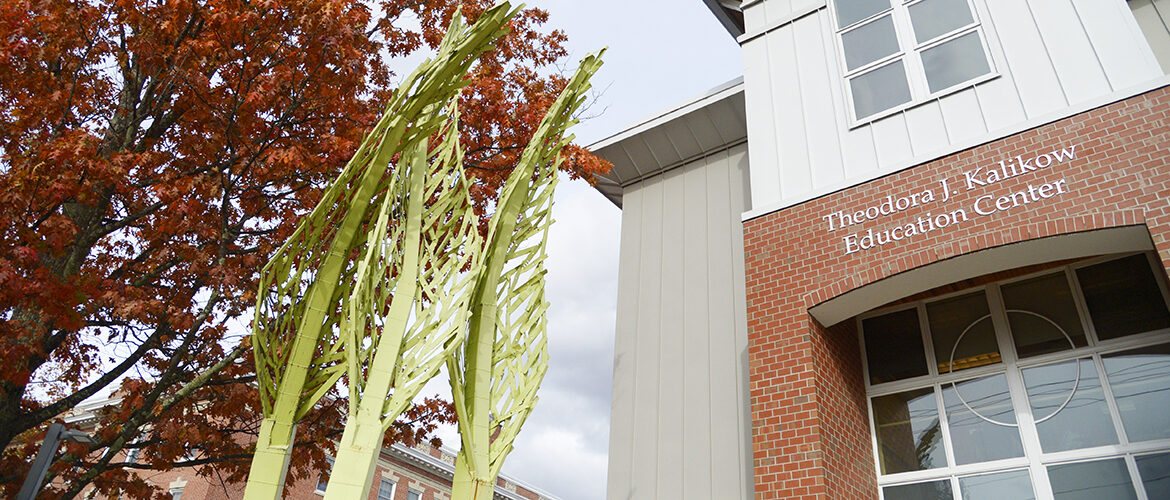
Theo Kalikow Education Center
186 High Street
Farmington, Maine 04938