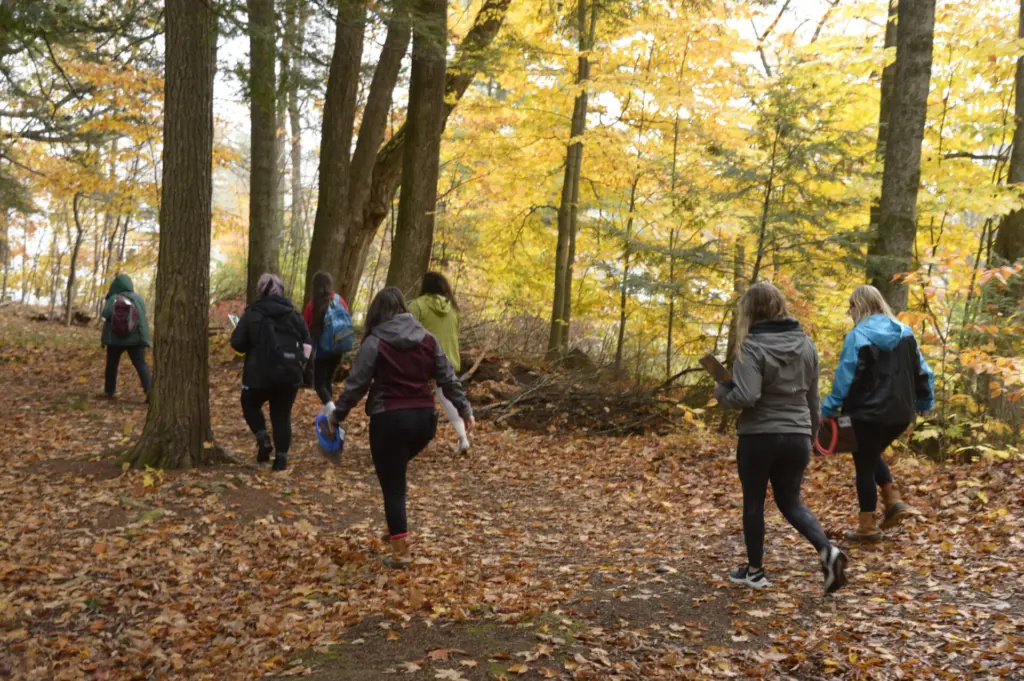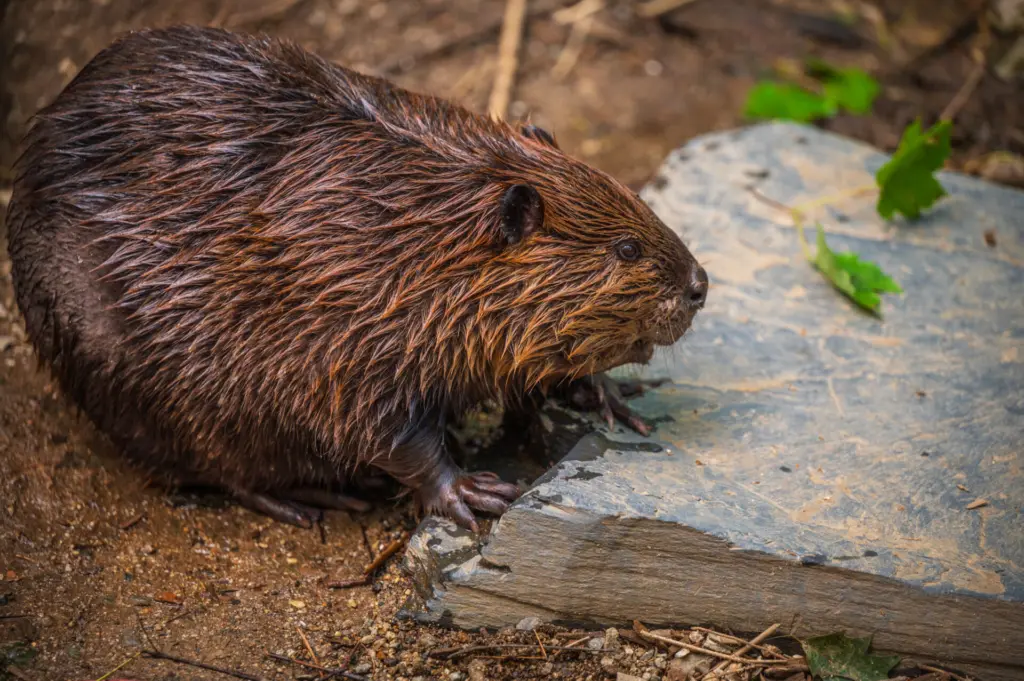
Table with items from nature: Twigs, shells, bark.

Nature-Based Education Graduate Certificate

Inspire Learning Through the Outdoors

Connect learners to the natural world around them.

The Graduate Certificate in Nature-Based Education is designed for educators of all age levels who want to connect students with the natural world and create hands-on learning experiences. The program is suitable for beginners exploring outdoor classrooms, educators looking to expand nature-based learning in their programs, non-formal educators, and early childhood teachers using or aspiring to use outdoor learning spaces.

The program emphasizes the benefits of outdoor learning, the range of programming options, and the educator’s role in facilitating high-quality experiences. Participants also explore resources and strategies to maximize the potential of their unique outdoor environments, equipping them to implement engaging, nature-based educational practices.
What you will study!

  • Creating and refining a nature-based curriculum
  • Integrating nature into all subjects
  • Designing outdoor spaces
  • Managing risk
  • Partnering with families and communities

Required Courses

EDU 539 Introduction to Nature Based Education and Outdoor Learning

This course focuses on preparing educators for meaningful experiences with outdoor learning and provides an overview of nature-based education, its foundations, and approaches. Students will learn about the history and theories, benefits for learners, the variety of programs possible, the educator’s role, high quality practices, and available resources needed for nature-based education in their own unique locations.

EDU 520 Nature-Based Programming and Leadership

This course looks at the policies, procedures, safety, and risk involved in conducting a nature-based program. The course explores benefit and risk assessment, regulations & licensing, the role of teachers and management and the importance of shared vision and principles. It includes how to engage families and the community in supporting nature-based education in schools and other programs.

ENV 577 Natural History of Maine/New England

This course provides background knowledge about Maine/New England’s plants, animals, geology, and ecological systems. Topics may include biology and diversity, major taxonomic groups, forest trees and site types, bedrock geology, soil biology, insect diversity, pollination ecology, freshwater biology, predation, herbivory, phenology, migration patterns, and identification of local flora and fauna.

Select any two electives from the following courses

EDU 559 Outdoor Classroom Design

This course focuses on the components and design layouts that help outdoor classrooms act as great places for children to explore, play, learn, and grow. We will examine the ways environments support play, the affordances of materials and loose parts, design guidelines, evaluating and mapping sites, choosing plants & trees and other materials, project budgeting, and creating a project calendar. Participants will have the opportunity to apply what they are learning to the design of an actual outdoor space.

EDU 549 Design Thinking for Early Learners and Elementary

This course immerses learners in the iterative processes of design thinking to address authentic and relevant problems of practice in their educational communities with a focus on STEAM. Participants will attain the ability to leverage design thinking to address educational challenges in their learning communities creating innovative solutions to meet learner needs.

EDU 508 Nature-Based Art

This course will provide teachers and other professionals who work with PreK-12 populations with experiential learning in art education as related to Maine’s unique environment and natural settings. Participants will have opportunities to engage in art-based experiences in multiple outdoor settings followed by online sessions that encourage reflection, discussion, and application to their own work with children. Participants will explore a variety of media, tools, and techniques (fine and graphic arts); learn about and incorporate elements of art, principles of design, and color theory; and will consider the role of nature-based art in personal development (“whole” learner) and in developing ecological consciousness. All activities of the course are aligned to Maine’s academic content standards.

EDU 514 Exploring Maine Through Children’s Literature

Using children’s literature as the foundation, PreK-8 educators will develop their understandings of place-based instruction situated within the context of Maine. As educators engage in experiential learning, they will link key scientific concepts
to literature; connect with the natural world around them; consider its history and natural resources; and gain an understanding of techniques that can be used to bring learning to the outdoor environment.

EDU 555 Integrating Nature into the Curriculum

Drawing on a foundation of place-based education, educators will explore the value of and strategies for bringing nature into the classroom and connecting kids with the outdoors in ways that are integrated across subject areas and developmental domains. Emphasis will be placed on emergent design, where teachers and students are co-constructors and co-learners, and in creating experiences where children feel confident to engage in cognitive, physical, and social-emotional risk-taking.

Contact Us to Get Started!

Division of Graduate & Continuing Education
University of Maine at Farmington
Theo Kalikow Education Center
186 High Street
Farmington, Maine 04938