Fieldwork

Connecting Classroom Learning to Real-World Experience

At UMF, fieldwork is an essential part of the educational experience, providing hands-on opportunities that extend beyond classroom learning.

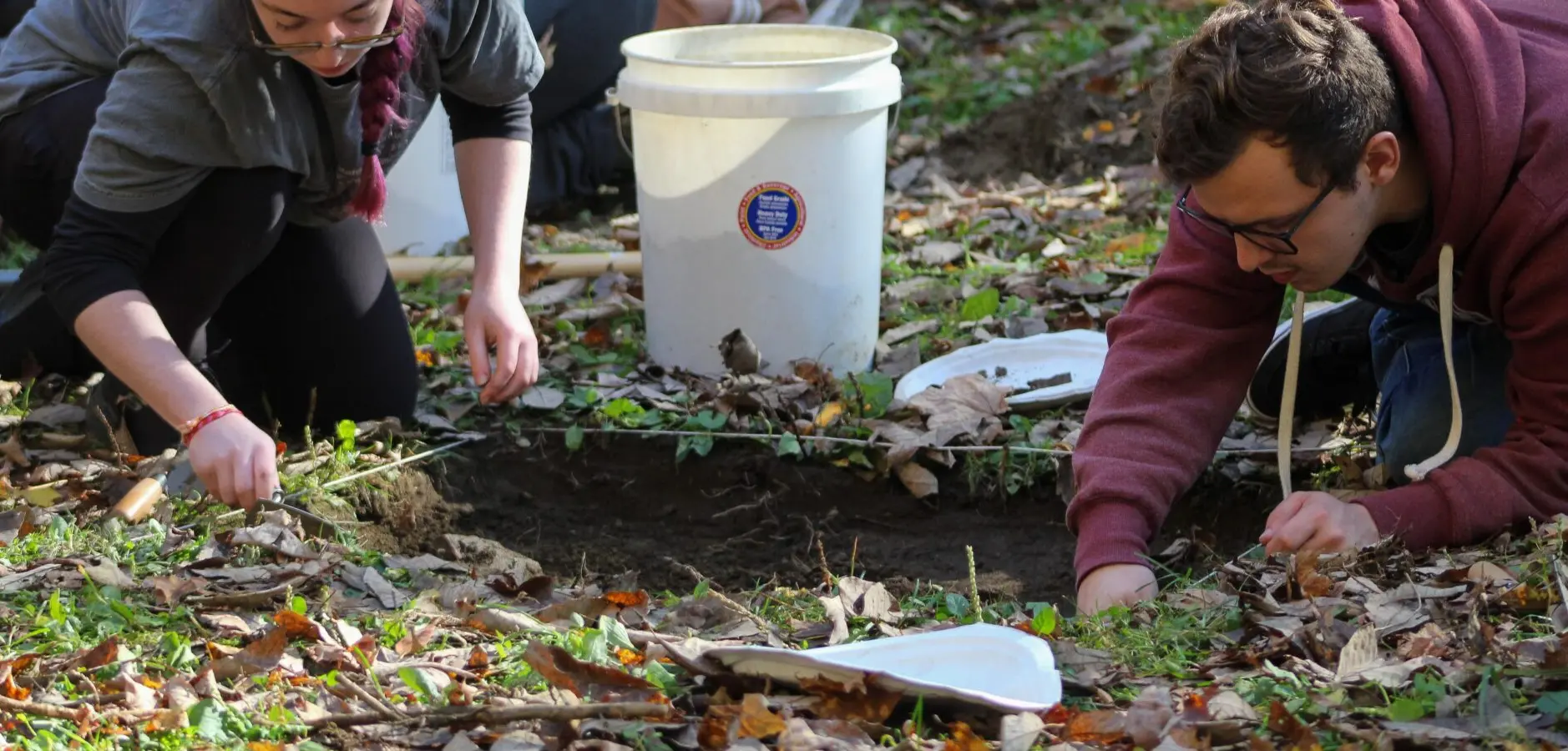
Students may participate in activities like archeological digs, wildlife monitoring, or environmental sampling, gaining practical skills that prepare them for their future careers. These immersive experiences not only deepen understanding but also help build confidence and professional connections, often opening doors to internships, graduate programs, and job opportunities after graduation.

Marine Biology – Salmon Egg Project

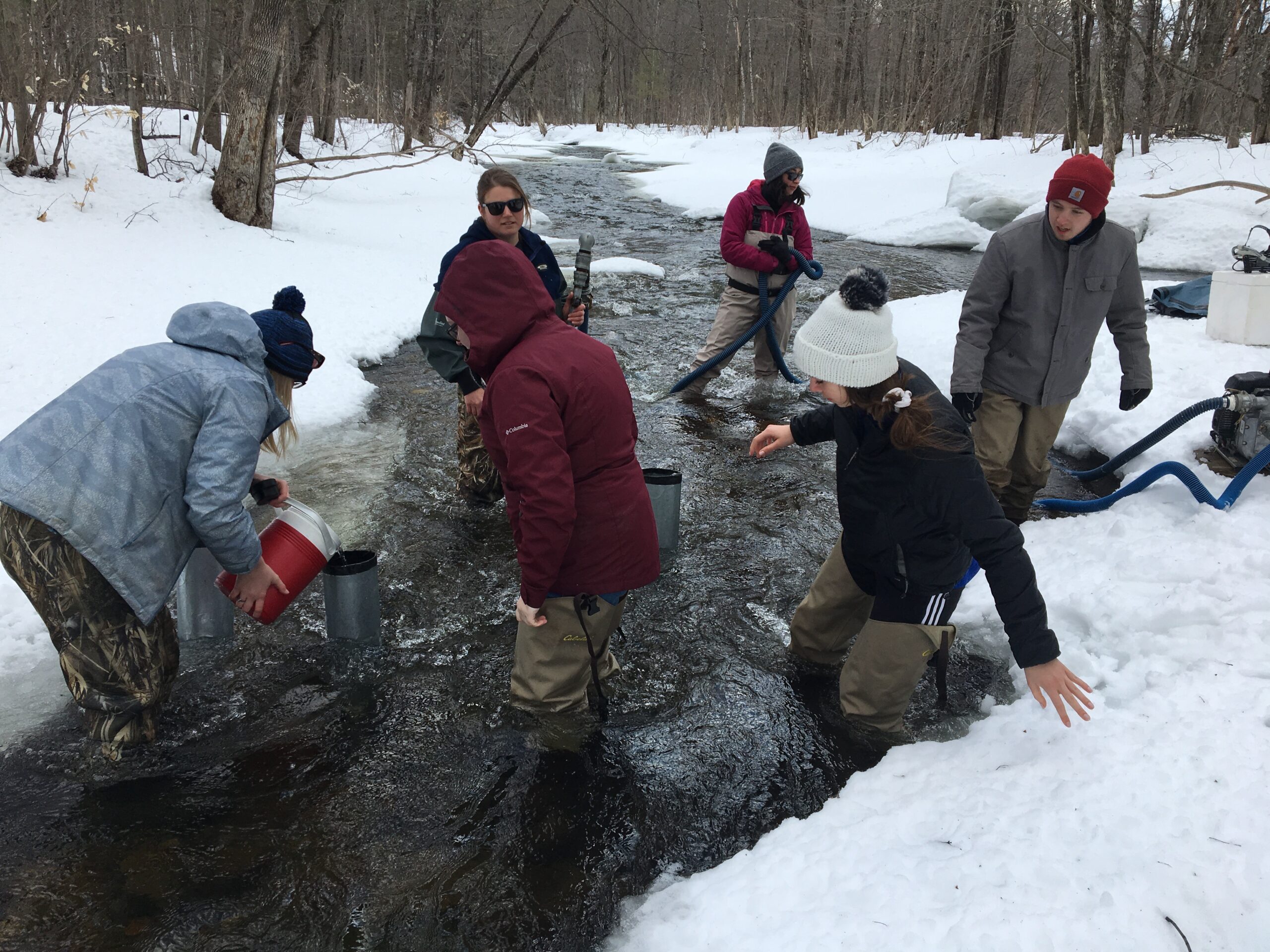
Blending history and marine biology, students in Professor Nancy Prentiss’s Honors course explored the ancient connections between migratory fish and the culture of Ancient Greece. Using the Atlantic salmon as a model species, the class partnered with the Maine Department of Marine Resources to plant approximately 10,000 salmon eggs in Temple Stream, just a short drive from campus.

Reese Mertz (’23) reflected on the impact: “There was something about being out there in the water that brought a certain understanding to the spawning of salmon that a textbook or lecture fails to do. We were able to feel the struggle and lengths to which the salmon go just to keep living. This allowed us to do something good for the environment, to learn in a new way, and to gain an experience that other students may miss out on if they only work in labs.”

Geography – Beaver Book Salinity

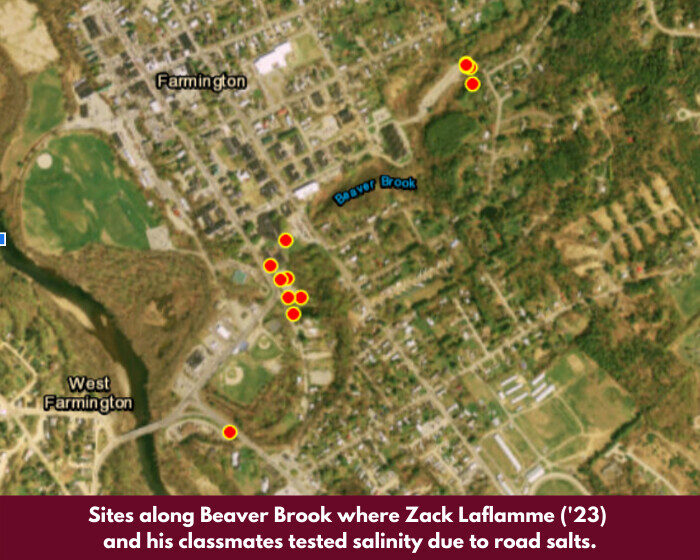
Concerned about the heavy use of road salt during the long Farmington winter, students in Professor Jesse Minor’s Physical Geography course set out to investigate its environmental impact on the nearby Beaver Brook stream. Students visited multiple sites along the stream, collecting data about the environment. Their research revealed elevated salinity levels downstream, suggesting that road salt runoff may be affecting local vegetation and aquatic life.

For Zack Laflamme (’23), the experience brought the course to life: “It definitely enhanced the class because we were going outside and learning things about Farmington that you wouldn’t otherwise think about. Our fieldwork, along with our class discussion, made it all flow together.”

C3TEP Logo

UMF’s Commitment to Excellence in Teacher Training

The University of Maine at Farmington’s Field Supervision Program prepares future educators through early, consistent field experiences that help students grow from learners into skilled, compassionate teachers. These experiences lead up to student teaching, where candidates apply what they’ve learned in real classrooms.

UMF’s teacher education programs are accredited by the Council for the Accreditation of Educator Preparation (CAEP), reflecting high standards in teacher preparation. This accreditation ensures that graduates are well-qualified and that the program continuously improves based on data and outcomes.

Undergraduate Research

Biology – Mammalogy

“Making Change in Maine”